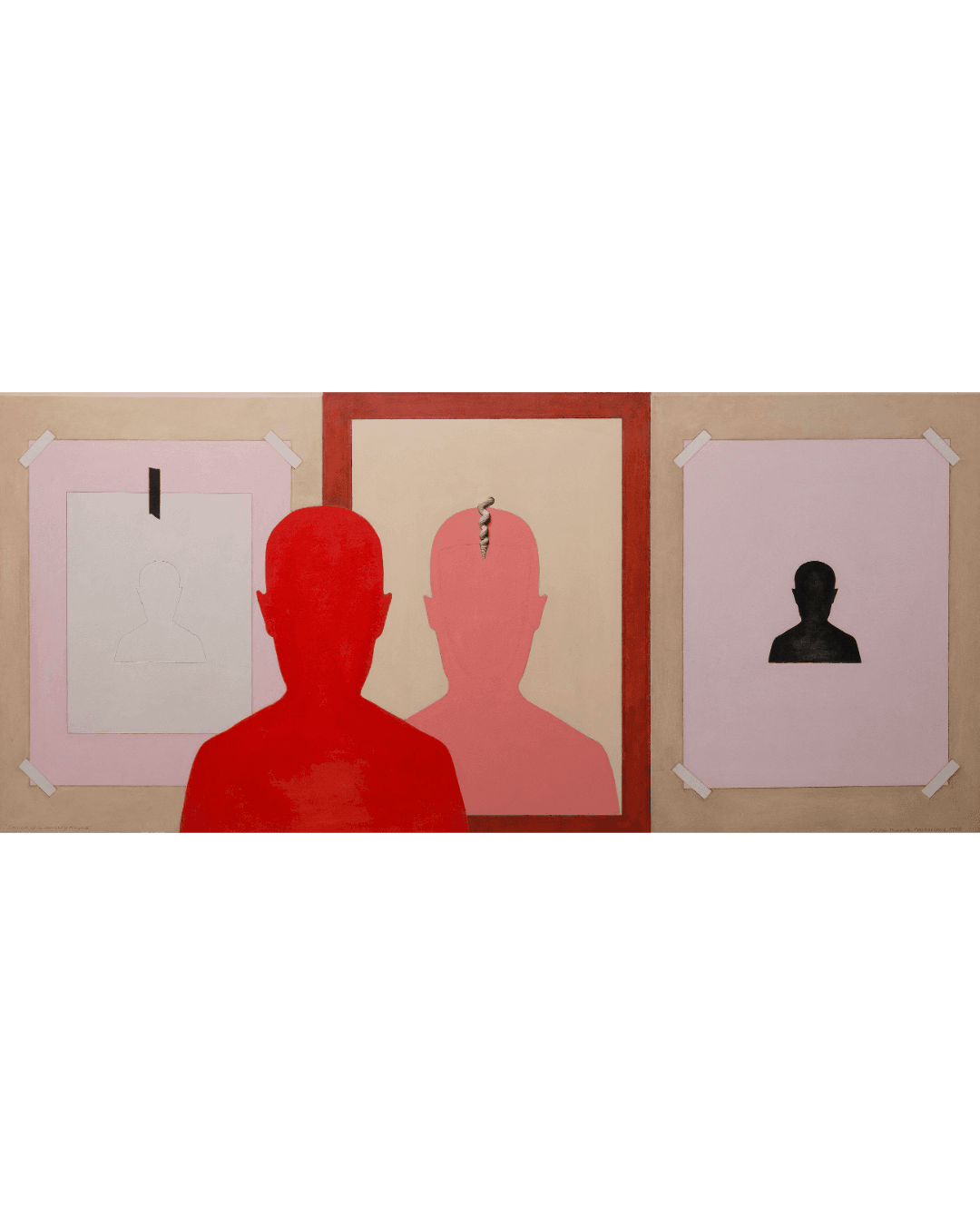
Bodies and Souls: Robert and Frances Coulborn Kohler Collection
Barbara Bullock, born in 1938 and raised in the vibrant neighborhoods of North Philadelphia and Germantown, has forged a remarkable fifty-year career as a multidisciplinary artist working across painting, drawing, and sculpture. Rooted in her Germantown studio today, her practice draws deeply from the mythology and culture of Africa and its diaspora, evolving from early figural representations to bold abstractions that probe identity, belief, gender, and the very essence of the artistic process. Trained at institutions like the Fleisher Art Memorial, Hussian School of Art, and Pennsylvania Academy of the Fine Arts, Bullock channels her Philadelphia upbringing—where public school art classes first ignited her passion—into layered works on heavy watercolor paper coated with acrylics, flashe paint, and gold leaf. Her core themes resonate with personal and collective memory, informed by travels across the African continent in the 1980s and 1990s, as well as reflections on events like Hurricane Katrina and the George Floyd murder, transforming sketches, photographs, and dreams into dynamic explorations of Black experience. What distinguishes Bullock's visual language is her innovative cut-paper assemblages, where painted sheets are meticulously shaped into sculptural forms—interchangeable elements like those in Bitches Brew or Swallowing Bitter Pills that can be reconfigured, mirroring life's fluidity. These works challenge European conventions, embracing surreal distortions born from a stroke in her youth that reshaped her hand-eye coordination and vision, birthing vivid, chaotic scenes of archetypal figures amid cultural and spiritual tumult. Influences from African art, jazz rhythms, and community dance infuse her portraits and installations with a generous, interconnected energy, as seen in series like Chasing After Spirits or Lalibella from The Journey, which blend graphic precision with emotional depth. Her dual role as artist and educator—leading classes in museums, schools, prisons, and programs like Arts Horizon—further enriches this oeuvre, earning accolades such as Pew Fellowships, Leeway Grants, and repeated Distinguished Teaching Artist honors from the New Jersey State Council on the Arts. In Woodmere Art Museum's Bodies and Souls: Robert and Frances Coulborn Kohler Collection, Philadelphia audiences encounter Bullock's profound contribution to representational art's imaginative and ethical force, her pieces amplifying the exhibition's celebration of the museum's growing holdings. Here, her figurative and abstract forms—poignant bodies and souls rendered in paint, paper, and sculpture—invite viewers into a dialogue on humanity's shared vulnerabilities, with Germantown's local resonance making her voice especially intimate. Philly art lovers will experience not just technical virtuosity, but a spiritual call to interconnection, as Bullock's diaspora-inspired visions underscore the collection's theme of ethical representation, leaving lasting impressions of resilience and cultural reclamation.
All exhibitions →Roland Ayers, born on July 2, 1932, in Philadelphia's Germantown neighborhood as the only child of Alice and Lorenzo Ayers, emerged as a masterful draftsman, painter, sculptor, and educator whose work wove together the threads of memory, place, and identity. After serving in the U.S. Army in Germany and earning a BFA in Art Education from the Philadelphia College of Art (now University of the Arts) in 1954, he journeyed through Europe in the 1960s and 1970s, including stints in Amsterdam, Greece, and West Africa, which profoundly shaped his shift from painting to intricate linear figurative drawings of a surreal bent. Based lifelong in his mythic Germantown—a landscape of Gothic Revival architecture, ethnic diversity, and class-bound resilience—Ayers worked across painting, drawing, sculpture, and even prints at the Brandywine Workshop. His style, infused with jazz-like improvisation, blended dreams, urban vignettes, African motifs, nature's rhythms, and human forms into existential reveries, exploring psychological depths and social marginalization through bodies in motion amid swaying trees and echoing seas. What distinguishes Ayers's oeuvre is its dreamlike calligraphy, a visual poetry merging surrealism, African iconography, and Philadelphia's haunting vernacular into free-flowing compositions that evoke the "reality of dreams." Influenced by his travels and the improvisational pulse of jazz, he populated canvases and papers with mystical figures—African American silhouettes, architectural phantoms, and organic swells—responding to the civil rights era's upheavals and art history's canons while critiquing Black artists' neglect in American institutions. Key works like the finely detailed "Tree of Life," a birthday gift to his wife, or his Whitney Museum standout from the controversial 1971 "Contemporary Black Artists in America" show, reveal a meditative practice delving into flesh, spirit, and cultural hybridity; his pen-and-ink drawings, in particular, achieve a magical surrealism, contrasting more figurative paintings and occasional collages or bronzes. In Woodmere Art Museum's "Bodies and Souls: Robert and Frances Coulborn Kohler Collection," Philadelphia audiences encounter Ayers's vital contribution to representational art's imaginative and ethical power, his intricate drawings and sculptures animating the body's liberation and soul's mysteries amid the collection's growth. Here, Germantown's souls—marginalized yet resilient—intertwine with broader human narratives, offering locals a homecoming revelation of their city's hidden mythologies through his jazz-inflected gaze on flesh, architecture, and reverie, affirming his enduring role in tracing identity's fantastical contours.
All exhibitions →Marta Sanchez, a Chicana painter born and raised in San Antonio, Texas, has made Philadelphia her home and creative hub, where she lives and works as both a visual artist and dedicated teaching artist. Holding an MFA in painting from the Tyler School of Art at Temple University and a BFA from the University of Texas at Austin, she employs a diverse array of mediums including painting on tin, copper, and aluminum, linocuts, monotypes, and recently steel sculpture. Her style draws deeply from traditional Mexican folkloric art, particularly the ex-voto retablos—narrative prayer paintings that blend devotion with storytelling—while weaving in contemporary social issues like migration, family resilience, and cultural identity. Core themes in her oeuvre revolve around Chicano/a experiences, from the transcendental poetry of San Antonio's train yards symbolizing Mexican migration to intimate portraits honoring community struggles, all rendered with a vibrant, folk-inspired visual language that bridges personal memory and collective history. What distinguishes Sanchez's work is its distinctive fusion of sacred Mexican traditions with urgent modern narratives, creating a visual poetry that feels both timeless and immediate. Her retablo-formatted paintings on metal evoke the tactile humility of folk altars, infused with bold colors and symbolic motifs that critique societal margins—think linocut prints echoing Chicano activism or steel sculptures like "Reclaiming Gurney Street," a public installation in North Philadelphia that transformed an opioid encampment into a communal space. Influenced by her Texas roots and Philadelphia's multicultural fabric, her art reflects cultural hybridity, as seen in pieces archived in institutions like the Philadelphia Museum of Art and Yale University, or held in Cheech Marin's renowned Chicano collection. This interplay of medium and message, rooted in her activism as co-founder of Cascarones Por La Vida—a grassroots initiative supporting HIV/AIDS-affected families—imbues her output with ethical depth and unyielding optimism. In the "Bodies and Souls: Robert and Frances Coulborn Kohler Collection" at Woodmere Art Museum, where Sanchez teaches, Philadelphia audiences encounter the imaginative force of her representational art head-on, celebrating the collection's growth through works that probe the human form's ethical and spiritual dimensions. Visitors will experience her paintings and sculptures as portals to embodied stories—souls etched in tin, bodies reclaiming space amid migration's echoes—inviting reflection on vulnerability, healing, and cultural continuity. Her presence underscores the exhibition's ethos, offering locals a poignant lens on Chicana resilience that resonates with the city's diverse tapestry, transforming gallery walls into sites of communal reckoning and quiet reverence.
All exhibitions →Bodies and Souls traces the imaginative and ethical force of representational art while celebrating the growth of Woodmere’s collection.